


1. Overview of Bilateral Relations
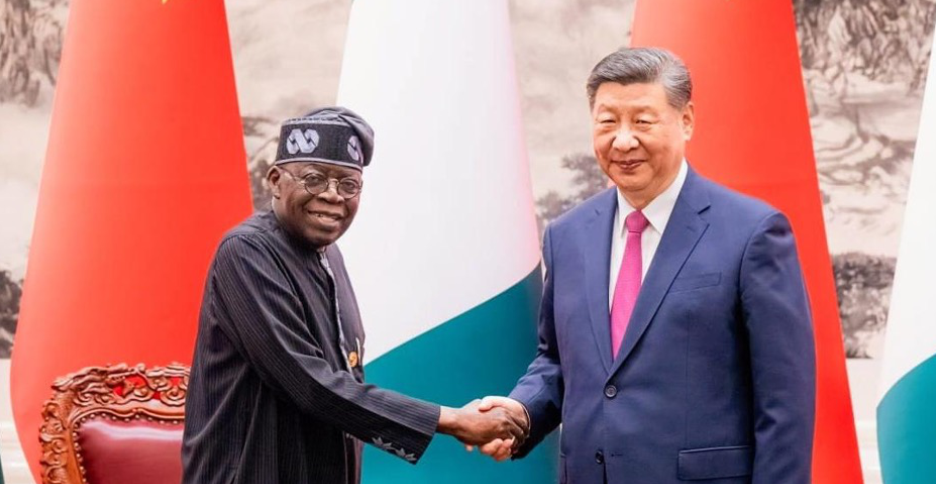
The Federal Republic of Nigeria and the People's Republic of China enjoy longstanding diplomatic relations founded on mutual respect, sovereign equality, non-interference in internal affairs, and a shared commitment to international peace, economic development, and mutually beneficial cooperation.Formal diplomatic relations between Nigeria and China were established on 10 February 1971, marking the beginning of a partnership that has expanded across political, economic, diplomatic, cultural, technological, and security sectors.Over the past five decades, the relationship has evolved from traditional diplomatic engagement into a multifaceted strategic partnership, reflecting the growing importance of both countries in regional and global affairs.In 2005, Nigeria and China established a Strategic Partnership. This relationship reached a new milestone in September 2024 when His Excellency President Bola Ahmed Tinubu, GCFR, undertook a State Visit to China and held bilateral discussions with His Excellency President Xi Jinping.During the visit, both leaders agreed to elevate Nigeria–China relations to a Comprehensive Strategic Partnership, reaffirming their commitment to deepening political trust, expanding economic cooperation, strengthening people-to-people exchanges, and advancing shared development priorities.In 2026, Nigeria and China commemorate the 55th anniversary of diplomatic relations, celebrating more than half a century of bilateral engagement and cooperation.
Nigeria and the People's Republic of China formally established diplomatic relations, laying the foundation for bilateral political dialogue and cooperation.
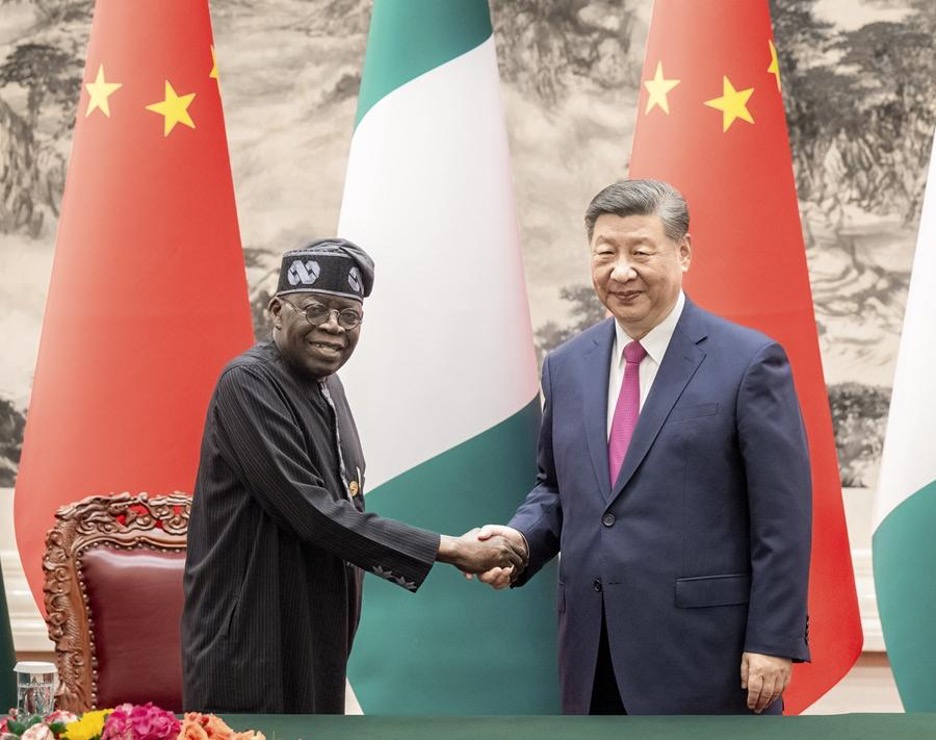
Both countries established a Strategic Partnership, strengthening cooperation in trade, investment, infrastructure, and diplomatic engagement.
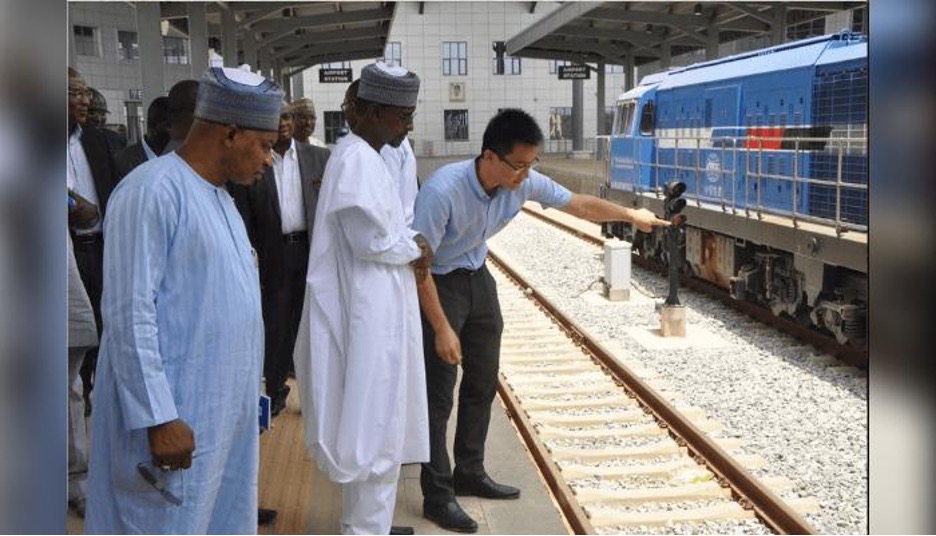
Nigeria and China signed a Memorandum of Understanding on cooperation under the Belt and Road Initiative, creating a framework for expanded infrastructure and development cooperation.
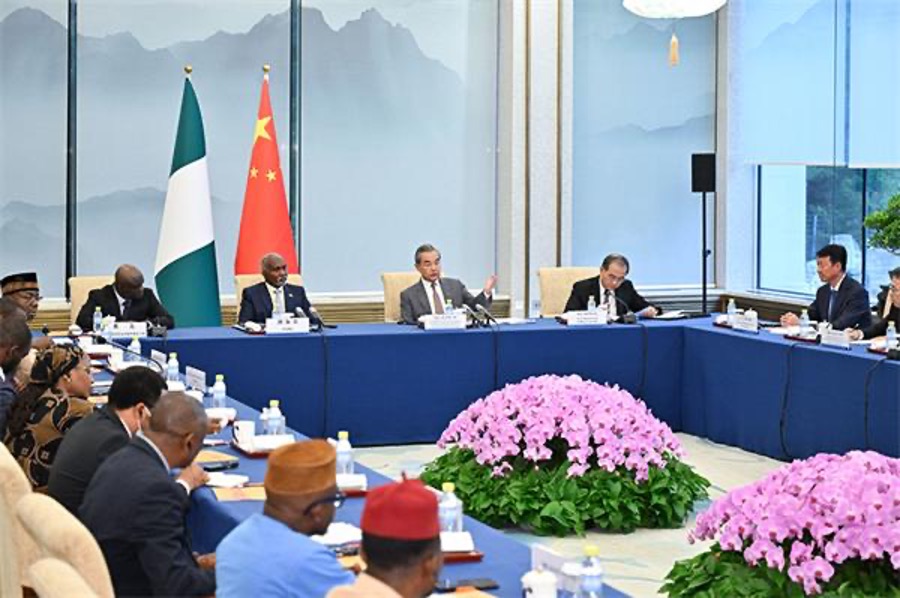
Both countries established the China–Nigeria Intergovernmental Committee mechanism to coordinate cooperation across key sectors.
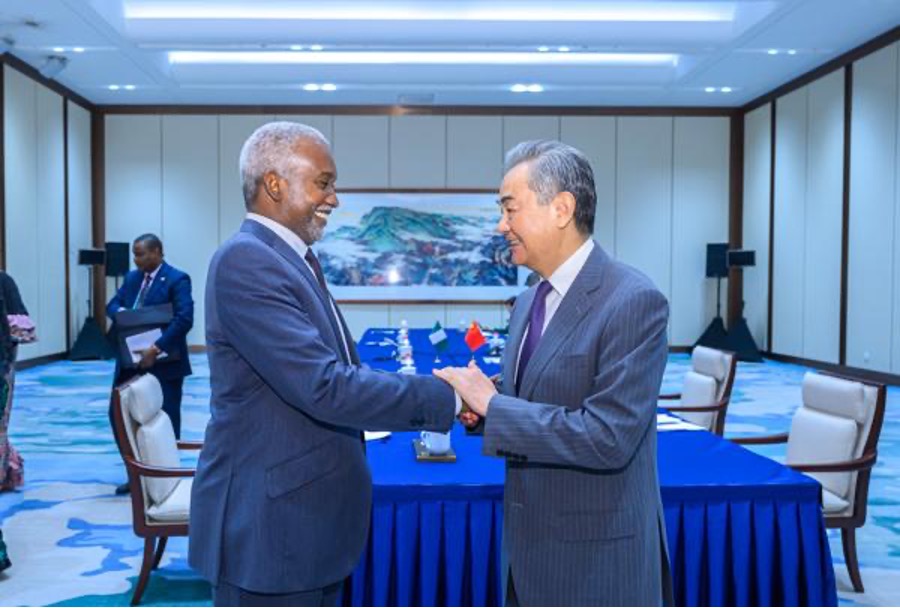
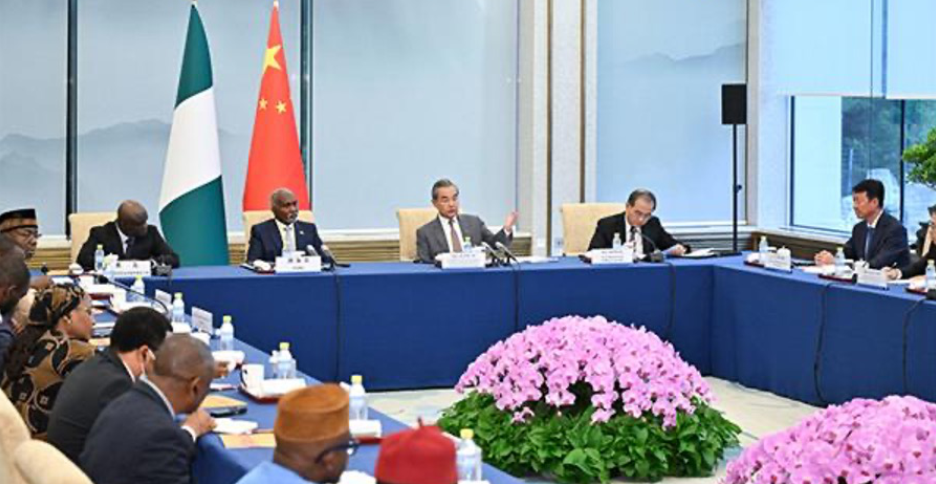
The first plenary session of the China–Nigeria Intergovernmental Committee was co-chaired by the Foreign Ministers of both countries, providing a platform for coordinated bilateral engagement.
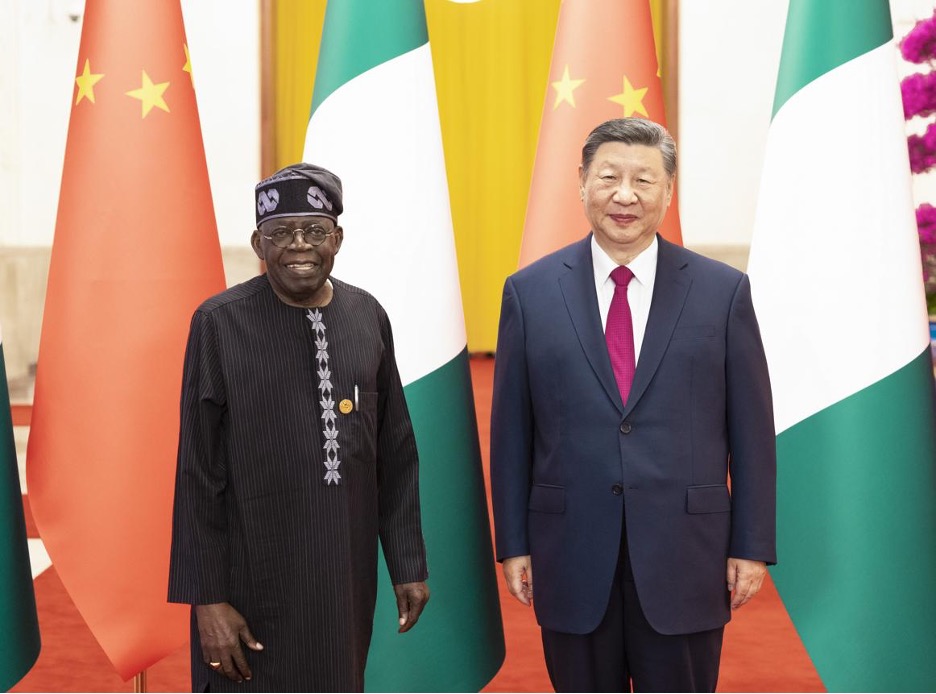
President Bola Ahmed Tinubu's State Visit to China resulted in the elevation of bilateral relations to a Comprehensive Strategic Partnership.
Nigeria and China commemorate 55 years of diplomatic relations, with continued engagement in economic cooperation, industrial development, technology, security, and cultural exchanges.
3. Political and Diplomatic Cooperation
Political and diplomatic engagement remains a central pillar of Nigeria–China relations.Both countries maintain regular high-level consultations through presidential visits, ministerial exchanges, diplomatic missions, and established bilateral mechanisms.Nigeria and China cooperate on matters of mutual interest within international and regional organisations, including the United Nations, the Forum on China–Africa Cooperation (FOCAC), and other multilateral platforms.The two countries reaffirm their commitment to the principles of the United Nations Charter, respect for sovereignty and territorial integrity, peaceful resolution of disputes, and the promotion of international cooperation.Nigeria maintains its longstanding One-China Policy, as reaffirmed in the September 2024 Joint Statement. China, in turn, has expressed support for Nigeria's national development priorities, regional peace initiatives, and economic transformation agenda.Through sustained diplomatic engagement, both countries seek to strengthen mutual understanding, expand cooperation, and promote stability and sustainable development
4. Economic, Trade and Investment Relations
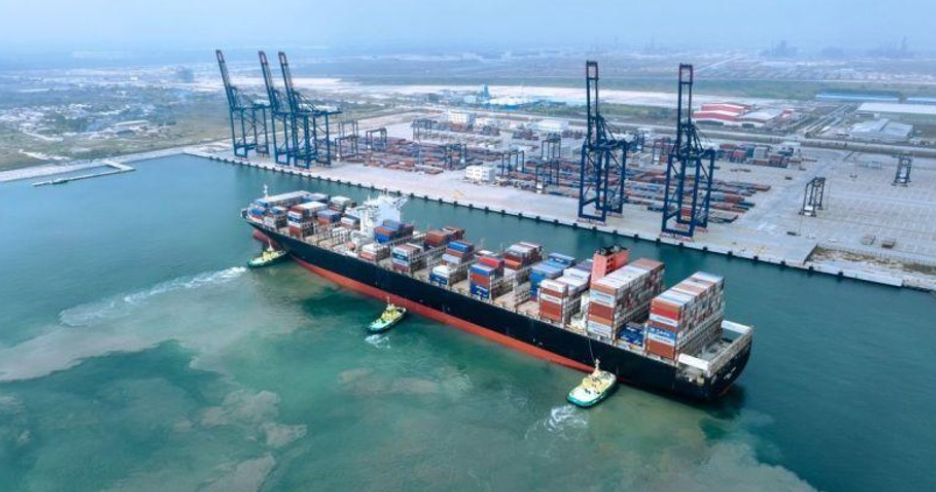
Economic cooperation represents one of the most significant dimensions of Nigeria–China bilateral relations.China is among Nigeria's principal trading partners and a major source of investment, engineering services, industrial equipment, and infrastructure development.Bilateral economic engagement encompasses manufacturing, agriculture, energy, solid minerals, transportation, telecommunications, construction, and financial services.Bilateral merchandise trade in 2025 US$28 billionReported by the Chinese Ambassador to Nigeria in February 2026. ng.china-embassy.gov.cnBoth countries are working to strengthen trade facilitation, expand market access for Nigerian products, encourage industrial investment, promote technology transfer, and support the development of local manufacturing capacity.The bilateral partnership also provides opportunities for Nigerian enterprises to participate in major trade exhibitions in China, including the China International Import Expo (CIIE), the China–Africa Economic and Trade Expo (CAETE), and the China Import and Export Fair (Canton Fair).Nigeria continues to encourage investments that promote value addition, employment generation, export diversification, and sustainable economic development.


6. Cooperation Under the Belt and Road Initiative and FOCAC
Nigeria participates in the Belt and Road Initiative (BRI) and the Forum on China–Africa Cooperation (FOCAC), which provide important frameworks for bilateral and wider Africa–China engagement.Under these frameworks, Nigeria and China seek to advance cooperation in infrastructure connectivity, industrialisation, agricultural modernisation, trade, investment, skills development, and technology.The 2024 FOCAC Beijing Summit provided an important opportunity to align areas of China–Africa cooperation with Nigeria's national development priorities, including the Renewed Hope Agenda.Both governments have expressed their commitment to implementing agreed initiatives and promoting practical cooperation that contributes to economic transformation and sustainable development.



7. Education, Culture and People-to-People Exchanges
Cultural and educational exchanges have contributed to mutual understanding and friendship between the peoples of Nigeria and China.Cooperation includes educational opportunities, academic partnerships, scholarships, language training, cultural exhibitions, tourism promotion, and professional capacity-building programmes.Nigerian students pursue academic and professional training in Chinese institutions, while educational and cultural initiatives promote Chinese language learning in Nigeria and greater awareness of Nigerian culture in China.Both countries also encourage exchanges in film, music, literature, sports, the creative industries, and cultural heritage.The 2024 bilateral Joint Statement identified programmes such as China–Nigeria Culture Week, the China–Nigeria Film Festival, and other cultural activities as platforms for deepening people-to-people relations.
8. Science, Technology and Digital CooperationScience, technology, and innovation are increasingly important areas of Nigeria–China engagement.Both countries have identified opportunities to deepen cooperation in telecommunications, digital infrastructure, artificial intelligence, cybersecurity, agricultural technology, renewable energy, and industrial innovation.The September 2024 Comprehensive Strategic Partnership included commitments to explore cooperation in the digital economy, green development, artificial intelligence governance, and data security.Nigeria welcomes partnerships that support digital skills development, research, technology transfer, local innovation, and the growth of a competitive knowledge-based economy.
9. Defence, Security and Regional CooperationNigeria and China maintain dialogue and cooperation on defence, security, and regional stability.Areas identified for cooperation include military training, technical capacity building, security equipment, intelligence capabilities, law enforcement exchanges, and responses to traditional and emerging security challenges.Both countries have expressed support for peace and stability in West Africa, including efforts to address terrorism, transnational organised crime, and maritime security challenges in the Sahel and Gulf of Guinea.These engagements are guided by mutual respect, national sovereignty, and shared commitments to regional and international peace.
10. Recent Developments and Future ProspectsThe elevation of bilateral relations to a Comprehensive Strategic Partnership in September 2024 opened an expanded framework for Nigeria–China cooperation.During diplomatic consultations in August 2026, both countries reaffirmed their commitment to translating political engagement into tangible economic and developmental outcomes.Discussions addressed expanded trade opportunities, Nigerian exports to China, manufacturing, special economic zones, agriculture, energy, mining, digital technology, artificial intelligence, and infrastructure development.The two sides also discussed China's zero-tariff market-access policy and a proposed RMB 200 million grant for jointly identified projects. These initiatives remain subject to their respective implementation arrangements. fmino.gov.ngLooking ahead, Nigeria seeks to leverage its relationship with China to advance economic diversification, attract productive investment, promote industrialisation, strengthen human capital development, and enhance technological capabilities.Both countries remain committed to sustained diplomatic dialogue and practical cooperation that serves their respective national development priorities.
11. The Role of the Embassy of Nigeria in BeijingThe Embassy of the Federal Republic of Nigeria in Beijing serves as Nigeria's principal diplomatic representation to the People's Republic of China.The Embassy is committed to advancing Nigeria's foreign policy objectives and strengthening bilateral relations through diplomatic engagement, economic diplomacy, investment promotion, cultural exchanges, and consular services.In carrying out its mandate, the Embassy facilitates engagement between Nigerian and Chinese government institutions, promotes trade and investment opportunities, supports Nigerian citizens residing in China, and encourages partnerships between businesses, educational institutions, and other relevant stakeholders.The Embassy remains dedicated to strengthening Nigeria–China relations in a manner that promotes mutual respect, shared opportunities, and sustainable development.
Official Reference Documents:
These links can also be published under an Official Documents section of the Embassy website.2024 Comprehensive Strategic Partnership Joint StatementState House, Federal Republic of NigeriaRead Official China–Nigeria Bilateral Relations ProfileMinistry of Foreign Affairs of ChinaRead 2024 Intergovernmental Committee Joint StatementEmbassy of China in NigeriaRead August 2026 Bilateral Diplomatic ConsultationsFederal Ministry of Information and National Orientation